
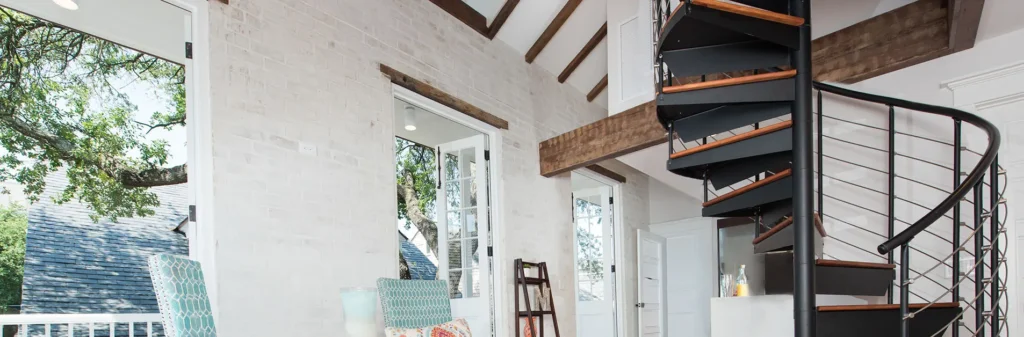
Key Takeaways
- Spiral stairs fit where straight stairs don’t, freeing up usable floor area.
- They’re safer and more comfortable than ladders for everyday use.
- Dial the look: modern steel, warm wood, or weather-ready outdoor options.
- Start with diameter, rise/run, and headroom; choose rail and treads last for style.
Why Spirals Beat Ladders in Small Apartments
Stability & comfort, every day
Ladders feel fine during a tour until you’re carrying sheets or half-asleep at 2 a.m. A spiral has consistent tread depth, a continuous graspable handrail, and a stable center column that’s designed for real, daily traffic.
Space you can actually use
A spiral staircase stacks its footsteps around a center pole, so the footprint is circular and tight. In living rooms and studios, that means you reclaim valuable wall length for a sofa, desk, or storage instead of a long straight run.
Design upgrade, not an afterthought
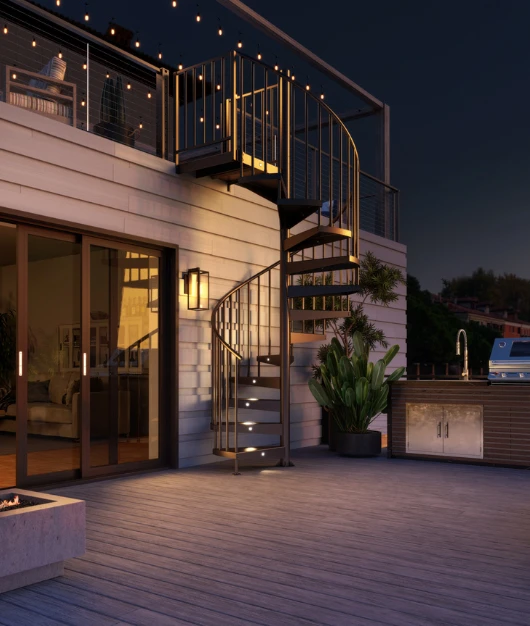
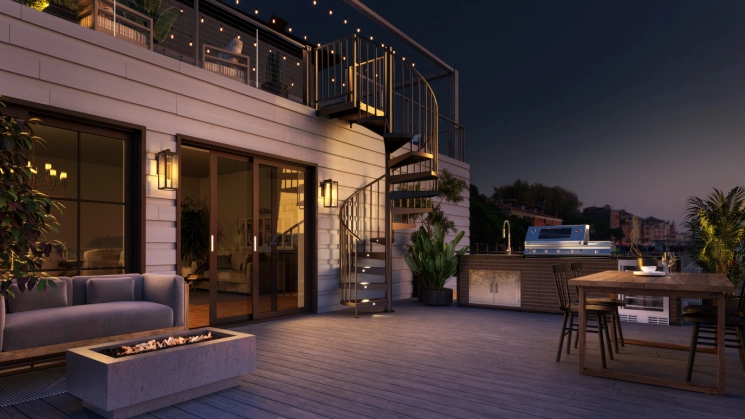
From minimalist steel to warm wood treads, spirals become an intentional focal point. In tiny apartments, a beautiful focal point earns its keep: function + sculptural presence in one.
How Small Can a Spiral Be? (And Still Feel Good)
Paragon’s indoor spirals start at a 3’6″ diameter (42″) and go up from there, enough to work in tight apartments while staying comfortable for daily use. If you can fit it, 4’–5′ diameter is the sweet spot for most lofts: still compact, but feels natural with a bag of laundry or your morning coffee.
- Ceiling height: How high is the loft floor from the lower floor? This drives total rise and number of treads.
- Clear opening: You’ll need a round opening in the loft floor that matches or exceeds the staircase diameter.
- Headroom: Plan the landing alignment to keep head clearance comfortable as you step onto the loft.
- Landing position: Decide where you want to exit at the top (e.g., align to a wall or a railing line).
Safety Starts with the Details
A spiral gives you three built-in safety advantages over a ladder: full-depth treads with consistent rise, a continuous handrail, and a rigid structure. To go from “safe” to “safest,” focus on tread grip, baluster spacing, railing choice, and lighting.
Note: Building codes vary by location and building type. Our team can help you spec a code-conscious spiral for your situation.
Which Styles Fit Apartment Aesthetics?
- Modern/Minimal: Powder-coated steel with slim balusters or line rail; darker neutrals with light walls and wood floors.
- Warm/Scandi: Steel frame with wood treads (oak, maple) and a soft white or gray finish.
- Industrial: Dark frame, steel treads, matte/texture; pairs with brick and exposed beams.
- Airy/Contemporary: Line rail to keep sightlines open in super small studios.
See Options for Your Loft
Use our interactive Build Your Stair tool to style and visualize your spiral in minutes.
Apartment Constraints to Plan For
- Tight hallways & elevators: Measure doorways, corners, and elevator cabs; kits ship in sections.
- Loft opening and guardrail: Confirm opening size and any guardrail/half-wall changes.
- Downstairs clearance: Orient the lower entry so traffic flows around furniture, not through it.
- Noise & neighbors: Coordinate install during allowable hours; kits minimize on-site cutting.
Loft Ladder vs. Spiral: A Quick Reality Check
- Daily living: Spirals are far easier to climb with pets, kids, laundry, or a mug of coffee.
- Night use: Handrail, consistent steps, and built in tread lighting = confident midnight trips.
- Aesthetic: Spirals read as “designed,” ladders read “temporary.”
- Resale: A permanent, beautiful stair adds perceived and real value.
Considering a ladder? Read our comparison to see why spirals win on safety & style.
How to Plan Your Spiral in 30 Minutes
- Measure the floor-to-loft height.
- Pick a diameter
- Choose a landing direction (top and bottom entry/exit).
- Pick a style package: frame finish, treads, and railing.
- Lock it in with a quote and target ship date.
Ready for a Quick Quote?
Answer a few questions and talk to one of our designers. We’ll recommend a diameter, landing, and style that fit your apartment.
Real-World Use Cases (Tiny Apartment Edition)
Studio Sleep Loft: A 4′ steel spiral with oak treads slots into the corner, freeing the main wall for a sofa + media console.
Micro-Office Mezzanine: A 3’6″ compact spiral with cable rail keeps sightlines open; desk shelves live beneath the stair’s arc.
Guest Loft Nook: A 4’6″ warm wood spiral becomes the feature, plants and art circle the base for a cozy vignette.
Download: Safe & Stylish Loft Access Checklist
Plan measurements, safety details, style choices, and install logistics—step by step.


