


Loft living is all about making the most of your square footage. Whether it’s a tiny home, a converted attic, or a modern studio, lofts create functional living space without expanding the home’s footprint. But one of the most important, and most overlooked, decisions is how you’ll access the loft itself.
At first glance, a loft ladder feels like the obvious choice. But once you consider comfort, safety, and style, spiral stairs quickly rise to the top.
This article breaks down the differences so you can choose the right option for your space.
Explore Loft Spiral Stairs with our Build Your Stair Configurator.
Why Loft Ladders Seem Like the Easy Choice
Ladders often come bundled with loft kits, making them the default option for many homeowners.
- Affordable upfront – A simple ladder is usually the cheapest way to reach a loft.
- Small footprint – Because ladders are vertical, they take up minimal floor space.
- Quick install – Many come pre-made and are easy to secure.
These qualities make ladders appealing for lofts used occasionally, like seasonal storage or a guest sleeping nook. But when you plan to use the space every day, a ladder’s limitations start to show.
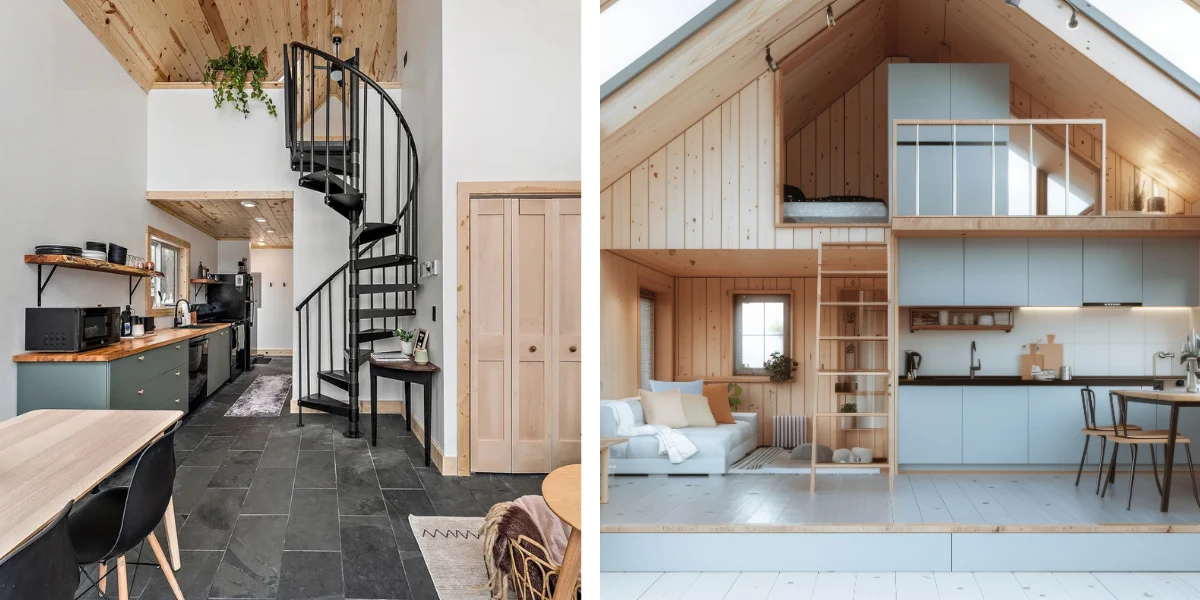
The Safety Risks of Loft Ladders
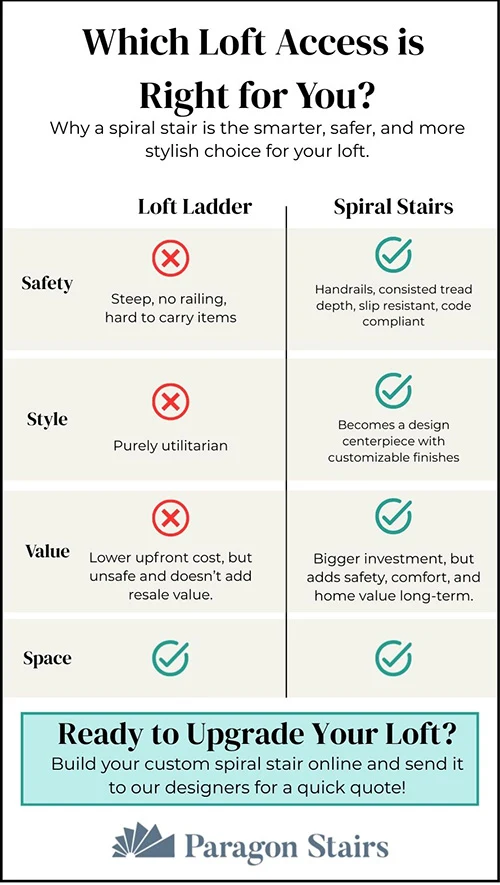
The biggest drawback of ladders is how unsafe and uncomfortable they can be long term.
- Steep climbs – Narrow rungs and steep angles make carrying anything tricky.
- No handrail – Without support, slips are far more likely.
- Age and accessibility – Kids, older adults, or anyone with mobility concerns will struggle with daily ladder use.
💡 Pro Tip: Think about how you’ll actually use the loft. If you’re hauling laundry, books, or even a morning coffee, a stable stair is worth the upgrade.
Why Spiral Stairs Make a Better Long-Term Choice
Spiral stairs combine the safety of full stairs with the space efficiency lofts require.
Compact Design
A spiral stair can fit into as little as 5’x5’, making it more efficient than a straight staircase while safer than a ladder.
Everyday Ease
Full steps, sturdy railings, and consistent treads mean you can use your loft naturally, no careful climbing required.
Adds Character
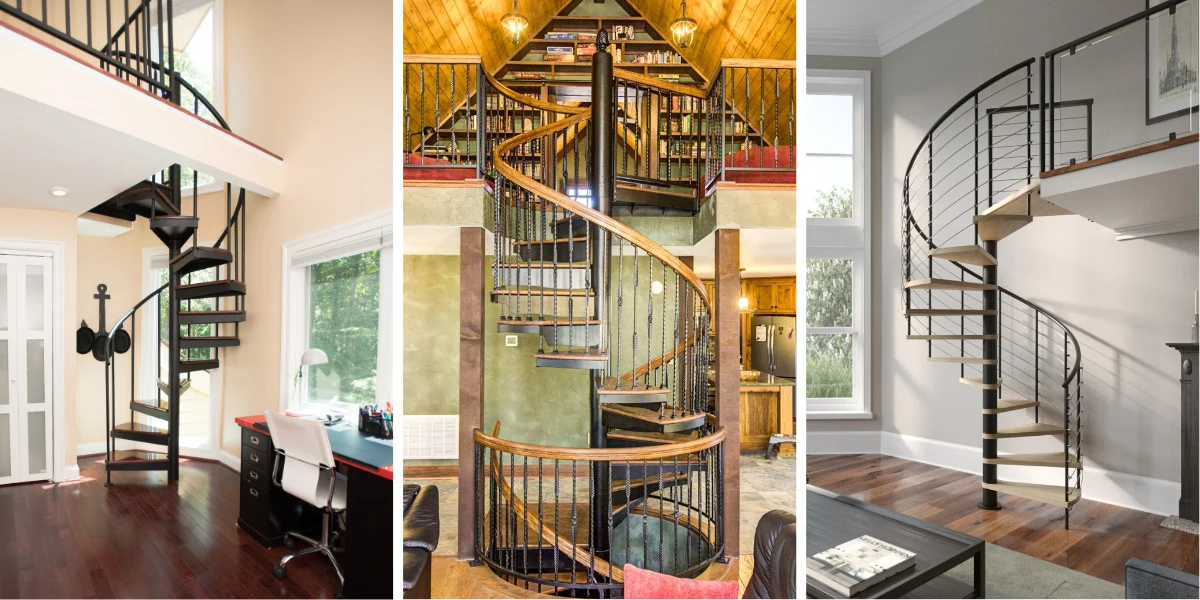
Spirals aren’t just practical; they become an architectural feature that enhances the look of your loft.
See What Fits Your Loft with our interactive spiral stair builder.
Style Options to Match Your Loft
Unlike ladders, spiral stairs are fully customizable to suit your home’s design.
- Industrial lofts → Sleek steel with cable railing.
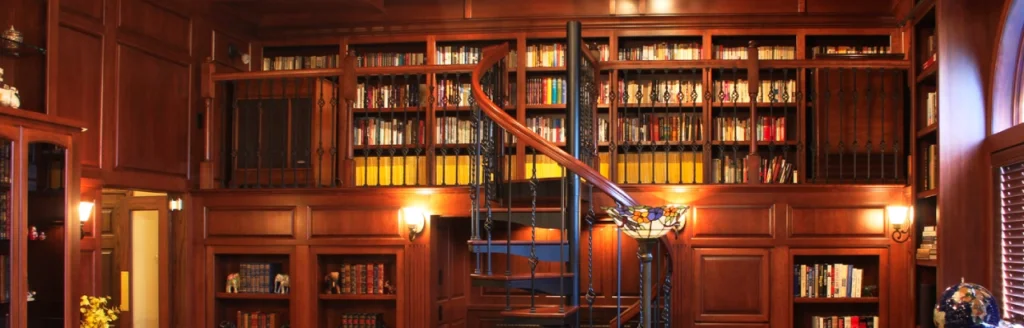
- Cozy attics → Warm wood treads and classic iron balusters.
- Tiny homes → Lightweight aluminum for durability and easy installation.
Cost Over Time: Ladders vs. Spiral Stairs
Ladders may win in the short term, but spirals win in the long run.
- Ladders – $100–$1,000 upfront, but little resale value and limited lifespan.
- Spiral Stairs – $2,000–$8,000+, higher upfront but safer, longer-lasting, and adds home value.
Your loft access isn’t just a utility, it’s part of your home’s design.
Common Questions Homeowners Ask
- Do spiral stairs take up too much space?
No, spirals are designed for small footprints and fit where traditional stairs cannot. - Are spiral stairs really safer than ladders?
Yes. With full steps, railings, and optional risers, spirals are significantly safer for everyday use. - Can I retrofit a spiral stair into an existing loft?
Absolutely. Many homeowners start with a ladder and later upgrade to spirals for comfort and safety.
Browse Loft Spiral Stairs to see available styles and finishes.
Final Takeaway
Loft ladders may seem simple, but they rarely hold up for everyday living. Spiral stairs deliver the same compact footprint while adding safety, comfort, and long-term value.
If your loft is more than just storage, a spiral stair is the upgrade that transforms it into a true living space.
Start Building Your Loft Spiral Stair Today with our Build Your Stair Configurator.


