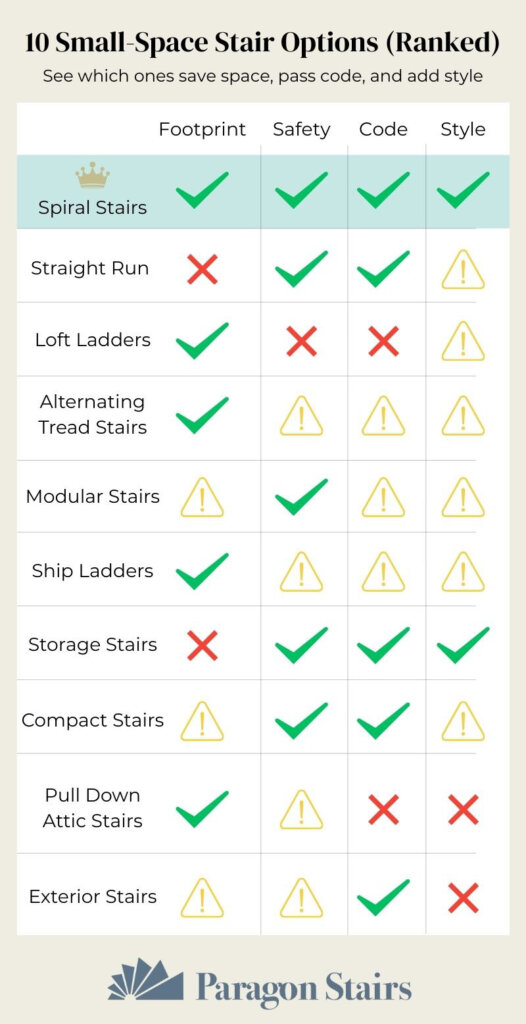

Designing stairs for a small home, loft, or attic is one of those challenges that can quickly turn into a puzzle. Straight stairs look familiar but eat up way too much square footage. Loft ladders are compact, but they aren’t the safest long-term solution. While there are plenty of clever alternatives, most come with trade-offs in comfort, style, or building code compliance.
That’s where spiral stairs come in. Spirals have all the benefits you need in a small space: compact footprint, customizable style, and everyday usability. Before we crown them the winner, let’s look at 10 small-space stair ideas and why spiral stairs consistently rise to the top.
See how spiral stairs compare to other compact stair solutions →
1. Straight Run Stairs: The Classic Choice
Straight stairs are what most of us picture when we think of a staircase: a single line of steps moving from one floor to another. They’re straightforward, familiar, and relatively easy to build.
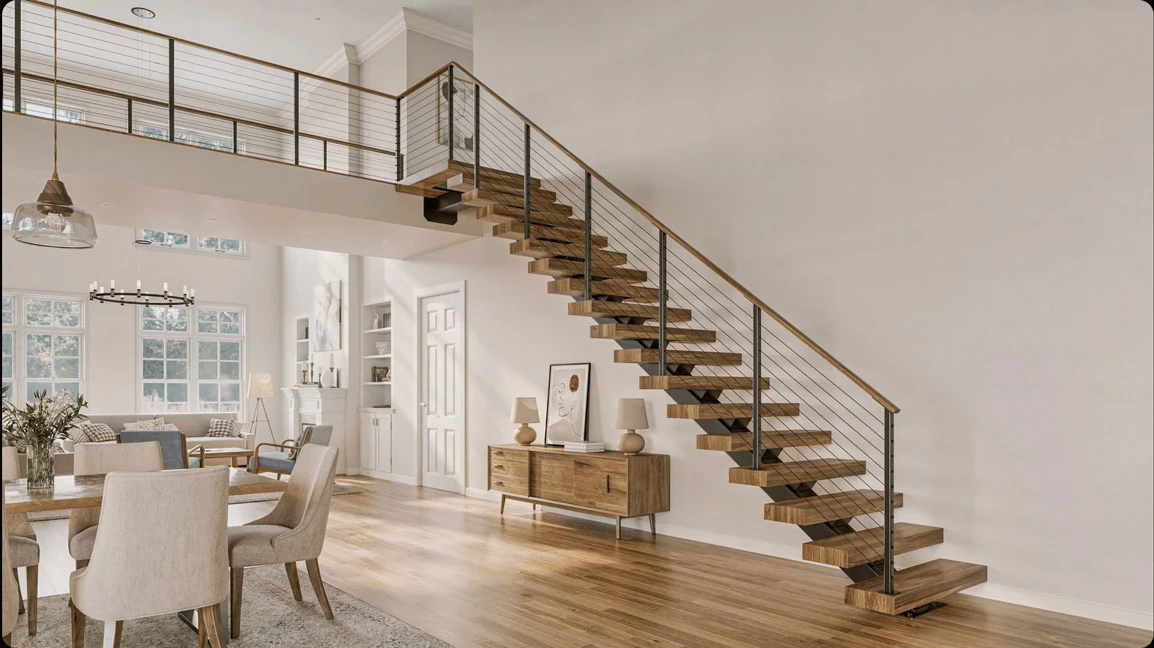
But in a loft or tiny home, straight runs quickly become space hogs. Even a short run eats up a significant chunk of square footage, limiting how you can arrange furniture or use the rest of the room. They also tend to feel heavy in compact layouts, taking away from the open, airy vibe many small-space homeowners want.
Spiral advantage: With a spiral stair, you get the stability and permanence of a full staircase in less than half the footprint.
2. Loft Ladders: Minimal but Risky
Loft ladders are popular in tiny homes and minimalist loft designs for a reason: they’re inexpensive, compact, and can be installed almost anywhere. They’re also an easy DIY project, which adds to their appeal.
The downsides? Ladders are rarely code-compliant for regular living spaces. They can be difficult to climb for kids, pets, or anyone carrying groceries or laundry. Daily use quickly highlights their limitations, and they don’t exactly scream “design feature.”
Spiral advantage: Spirals give you nearly the same footprint savings as a ladder, but with everyday comfort and code-compliant safety. Instead of feeling like a temporary fix, they become a permanent, stylish part of your home.
3. Alternating Tread Stairs: Clever but Awkward
Alternating tread stairs are one of the more creative compact designs on the market. Each step is cut away on one side, so the treads “alternate” between left and right. This allows you to climb in a more vertical space than a traditional staircase.
While clever, alternating tread stairs can feel awkward to use. They require focus, especially when descending, and are often limited to secondary or utility spaces. In many areas, building codes only allow them for non-primary use, like accessing mechanical rooms.
Spiral advantage: Spiral stairs achieve the same compact effect but with evenly spaced steps. You don’t have to think about your footing every time you climb, which makes them a smarter choice for high-traffic lofts or tiny homes.
4. Modular Stairs: Flexible Kits
Modular stair kits are designed to be flexible. They often come in pieces that can be adjusted to fit your space, making them appealing to DIYers or anyone trying to solve tricky layouts.
The challenge is that modular stairs can sometimes feel like a compromise. They may not last as long as a traditional staircase, and visually they don’t always blend into a finished home. Instead of becoming a feature, they can look temporary or out of place.
Spiral advantage: Spiral kits give you the same installation flexibility while offering higher quality and design cohesion. With customizable materials like wood, steel, or aluminum, spirals can be tailored to match your home’s look.
Browse modern spiral stair styles for small homes →
5. Ship Ladders: Steep and Space-Saving
Ship ladders are a hybrid between a ladder and a staircase. They’re angled rather than vertical, with wider treads to make climbing easier. They’re often used for lofted sleeping areas or attic access.
While more comfortable than a true ladder, ship ladders are still steep and not ideal for daily use. They also may not meet building code for primary stairs, limiting their placement in residential projects.
Spiral advantage: Spiral stairs provide safe, everyday access without the steep climb. They give you the same compact footprint but with a user-friendly experience.
6. Storage Stairs: Dual-Purpose
Storage stairs are a favorite in tiny houses. Each step doubles as a drawer, shelf, or cubby, turning the staircase into a clever organizational solution.
This is a smart use of vertical space, but the stairs themselves still take up a significant amount of floor area. In very tight homes, that footprint can make a big difference.
Spiral advantage: By choosing a spiral stair, you save enough floor space to create storage solutions elsewhere. Instead of being locked into one bulky piece, you can add shelves, cabinets, or furniture that fits your design.
7. Fold-Down Attic Stairs: Occasional Access
Pull-down attic stairs are designed for occasional use. They tuck away neatly into the ceiling and fold down when needed, making them perfect for storage spaces you don’t access every day.
For regular living spaces, though, they’re not practical. They aren’t comfortable or safe for daily use, and they don’t add to your home’s aesthetic.
Spiral advantage: A spiral stair can provide permanent, stylish access to an attic or loft you want to use as a bedroom, office, or studio. Instead of a hidden utility ladder, you get a centerpiece staircase that elevates the room.
8. Compact U-Shape or L-Shape Stairs
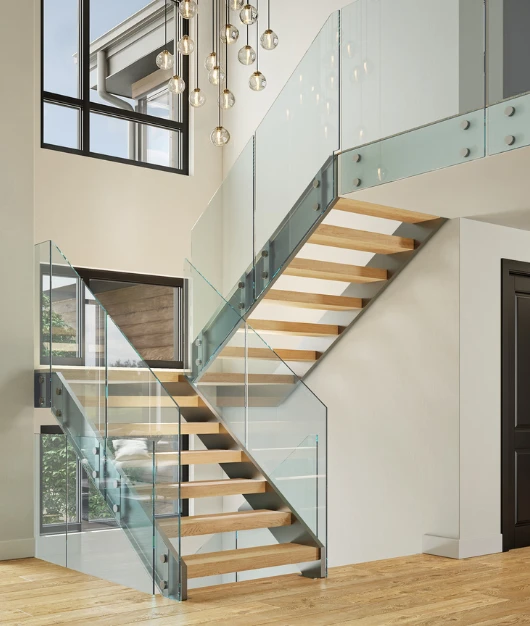
When space is tight, some homeowners choose U-shaped or L-shaped stairs. By turning a corner, these stairs reduce the total length required compared to a straight run.
While they save some space, they’re still bulky. They take up a large corner of the room and can be tricky to integrate into small layouts without dominating the space.
Spiral advantage: Spiral stairs can also fit neatly into a corner, but they do it with far less square footage. This makes them easier to work around when you’re furnishing or designing the rest of your room.
9. Exterior Access Stairs: Shifting the Problem Outside
Some homeowners look outside to solve the footprint challenge, installing exterior stairs to reach lofts or upper levels. While this can work for occasional access, it comes with its own drawbacks: weather exposure, security concerns, and the inconvenience of stepping outside to move between spaces.
Spiral advantage: Interior spirals give you the same compact solution without leaving the house. They’re permanent, comfortable, and usable year-round, rain or shine.
10. Spiral Stairs: The Ultimate Small-Space Solution
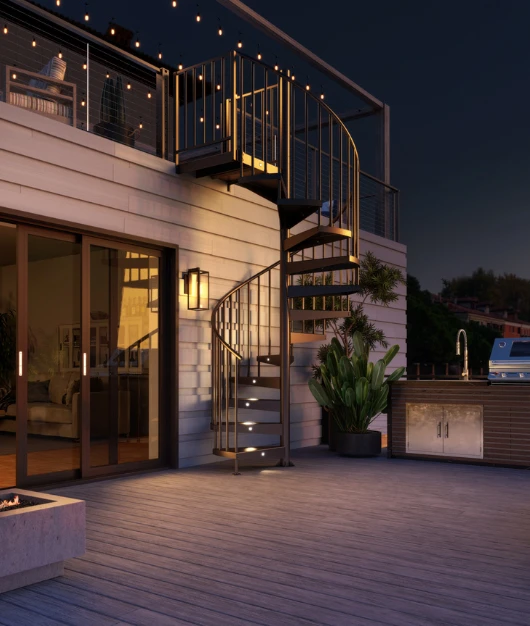
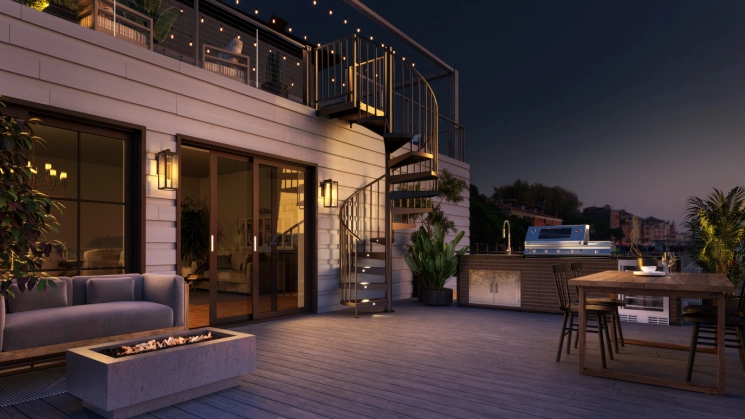
Finally, the star of the show: spiral stairs. Spirals combine all the best features of the options above without the downsides. They’re compact, stylish, and customizable, with designs that range from modern steel to classic wood.
Best of all, spiral stairs are code-compliant and safe for daily use. You don’t have to choose between saving space and having a permanent, practical staircase. Spirals give you both.
-
Customizable design: Wood, steel, aluminum, or mixed-material designs.
-
Durability: Built to last as a permanent feature in your home.
-
Aesthetic impact: Instead of hiding your stair, you can highlight it as a design centerpiece.
Why they win: When it comes to small-space living, spiral stairs solve problems other stair types can’t. They fit into tight footprints, look beautiful, and provide everyday usability that ladders or hybrid stairs can’t match.
Design your own spiral stair online in minutes →
Choose Spirals for Smart Small-Space Design
Every small-space stair option comes with its pros and cons, but spiral stairs consistently stand out. Unlike ladders or alternating tread designs, they’re safe, stylish, and code-compliant. Unlike bulky straight runs or U-shaped stairs, they use a fraction of the footprint.
If you’re designing a loft, tiny home, or attic, spirals let you save space and elevate your design.
Explore Paragon’s spiral stair collection and get a free quote today →