

Designing for tight footprints, such as in lofts, tiny homes, or compact additions, means every inch matters. One of the most impactful choices you’ll make is how to move between levels. The access solution you pick affects daily comfort, code compliance, and the overall feel of your space.
Most small-space projects come down to three options: ladders, spiral stairs, and traditional stairs. Each solves a different problem. Below, we break down when each one shines, where it falls short, and how to pick the best fit for your layout, budget, and lifestyle.
Key Takeaways
- Ladders have the tiniest footprint and lowest cost, but they’re best for occasional use.
- Traditional stairs are most comfortable to climb but require the most floor space.
- Spiral stairs balance footprint, safety, and style; ideal for daily access in small spaces.
- Start your decision with frequency of use, users (kids/guests), headroom, materials, and local code.
1) Ladders: Minimal Footprint, Maximum Trade-Offs
Ladders are the smallest and often the least expensive way to reach a loft. They’re common in DIY tiny homes and simple sleeping nooks because they install fast and “disappear” visually.
Pros
- Smallest footprint: Occupies the least floor area.
- Budget-friendly: Many prefab kits are inexpensive.
- Quick install: Great for temporary or low-use spaces.
Cons
- Limited accessibility: Steep angles and narrow steps are tough for kids, pets, and older adults.
- Safety limitations: Daily up/down can be risky, especially at night.
- Design ceiling: Function over form; fewer style options.
2) Traditional Stairs: Familiar Comfort, Larger Footprint
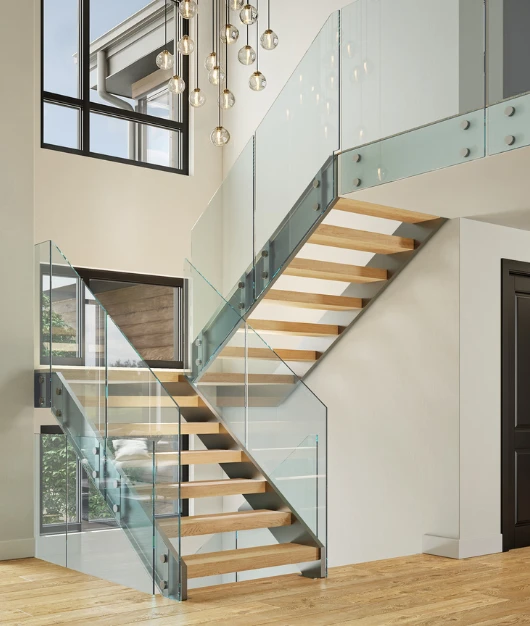
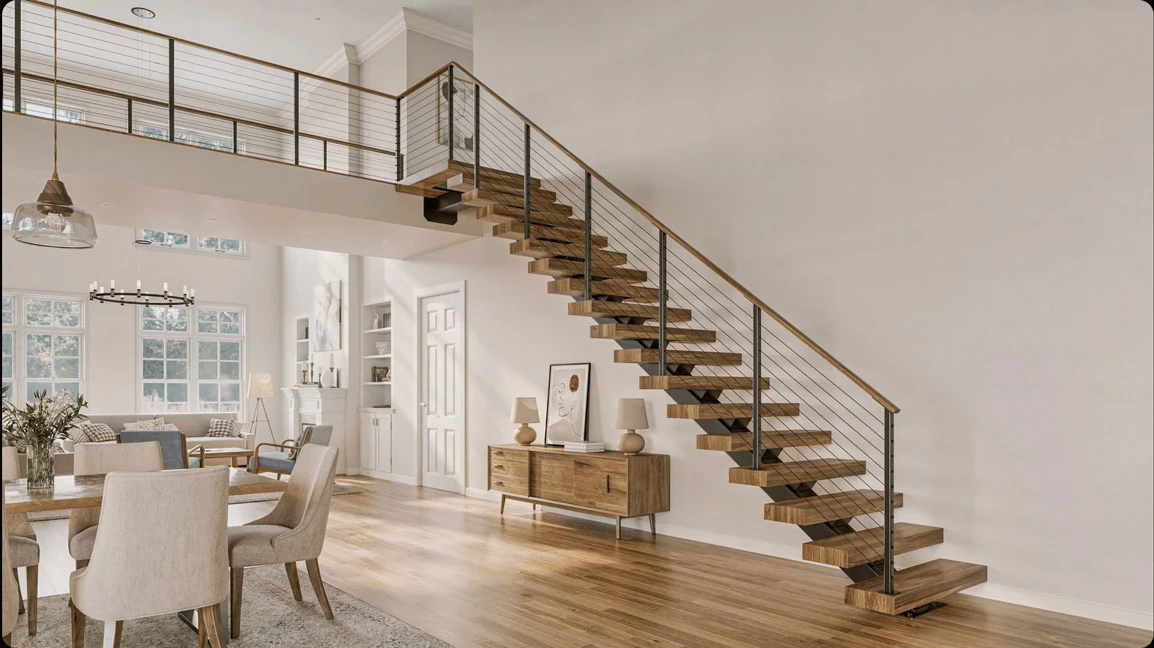
Nothing beats a traditional stair for ease of use. Full-depth treads, gentle risers, and a familiar rhythm make them the most comfortable option if you have the room.
Pros
- Most comfortable climb: Full treads and predictable cadence.
- Classic look: Works with traditional interiors.
- Storage potential: Reclaim the space under the run.
Cons
- Space hungry: Requires a long run and headroom clearance.
- Layout constraints: Harder to tuck away in tight plans.
- Framing work: Often needs more structural changes.
3) Spiral Stairs: The Small-Space Sweet Spot
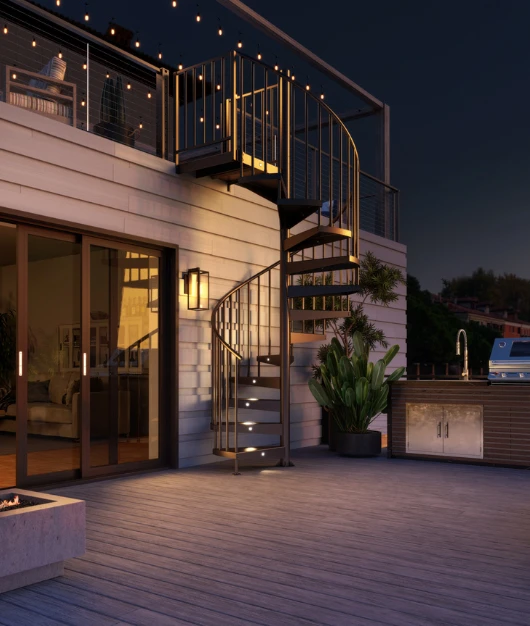
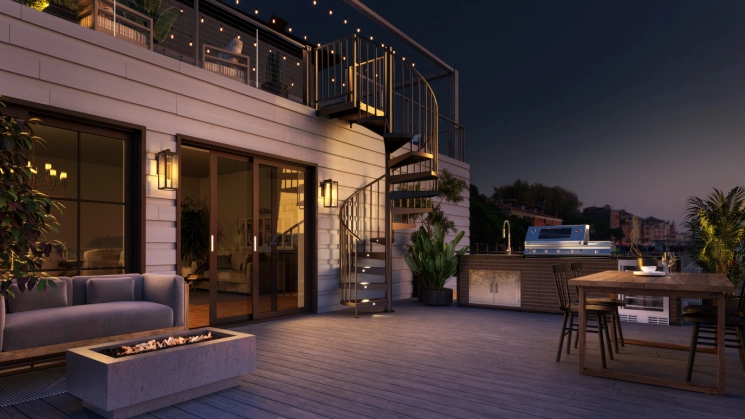
Spiral stairs bridge the gap: compact like a ladder, but comfortable and code-compliant like a stair. They’re a favorite for small homes, lofts, and creative vertical links where floor space is precious.
Pros
- Compact footprint: Fits within a neat circular diameter.
- Code-compliant designs: With the right diameter and tread width, spirals are safe for everyday use.
- Design-forward: From modern steel to warm all-wood, your stair becomes a focal point.
- Flexible placement: Tucks into corners and open plans.
Cons
- Precision matters: Diameter, riser height, and baluster spacing must meet local code.
- Moving bulky items: Large furniture is trickier on a curve.
How to Decide: Start with Priorities
Use the quick guide below to match your needs to the best option:
| Your Priority | Best Fit | Why |
|---|---|---|
| Absolutely minimal footprint | Ladder | Smallest floor area; quick install |
| Everyday comfort for all ages | Traditional Stair | Full-depth treads; easy climb |
| Space-saving + design impact | Spiral Stair | Compact, code-compliant, architectural focal point |
| Lowest upfront cost | Ladder | Budget-friendly kits |
| Open, airy aesthetic | Spiral Stair | Cable or glass rail keeps light flowing |
Ready to design your space-saving stair?
Start in the Build Your Stair Tool
Pick diameter, treads, and railing in minutes. Save your build and send to a designer.
Key Design Factors (Before You Lock It In)
1) Frequency of Use
Daily traffic needs comfort and handrails: spiral or traditional wins here. For occasional storage access, a ladder can still make sense.
2) Who’s Using It
Young kids, older adults, and pets benefit from consistent tread depth, grippy surfaces, and continuous railing. Spirals and straight stairs make safety features easier to implement.
3) Height & Headroom
Measure floor-to-finished-floor height and map head clearance. Spirals solve tricky corners; straight stairs need the linear run.
4) Materials & Style
- Steel/Aluminum: Sleek, durable, modern (great indoors/outdoors).
- Wood: Warm and classic; pairs well with black accents.
- Railings: Cable or glass keeps small spaces feeling open.
5) Local Code
Tread width, riser height, baluster spacing, and handrail graspability must meet local requirements.
Why Spirals Often Win Small Spaces
When footprint, safety, and aesthetics all matter, spirals check the boxes. You keep precious square footage, get a comfortable climb for daily use, and add a design moment that elevates the whole room. With the right diameter and rail, a spiral feels practical, not like a compromise.
Next Steps: Get Your Spiral Right the First Time
- Measure total rise (floor to finished floor).
- Decide where the stair lands (corner, wall, center of room).
- Choose diameter (starting at 3’6” and up).
- Pick materials: indoor steel, all-wood, or weather-ready aluminum/galvanized.
- Confirm local code with our specialists.
Ready to finalize details?
Talk to a Stair Expert Today
We’ll confirm fit, finishes, lead time, and provide a tailored estimate.
The Bottom Line
If the space is occasional-use and ultra-tight, a ladder is the simplest path. If you’ve got generous room and want maximum comfort, a straight stair delivers. For almost everything in between, a well-designed spiral stair is the small-space sweet spot—saving square footage while adding everyday usability and a standout look.


