
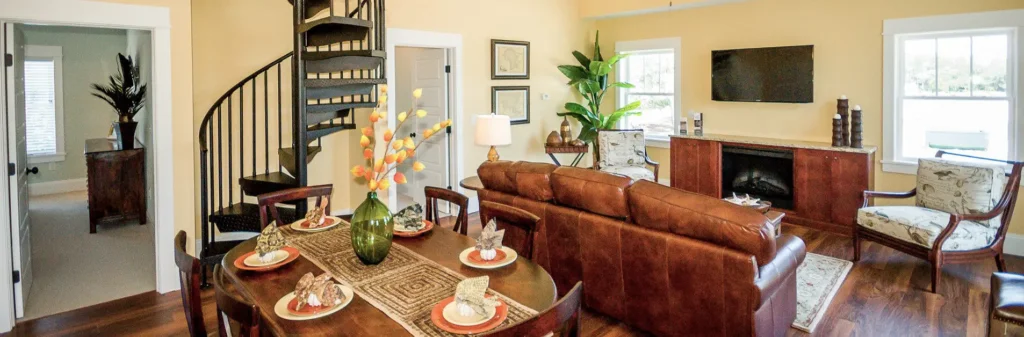
The short answer: A well-sized, code-compliant spiral stair can increase perceived value by unlocking usable square footage, creating desirable outdoor connections, and giving your listing a sculptural focal point. While few upgrades return dollar-for-dollar, features that improve everyday function and buyer appeal tend to perform better at resale according to Zillow.
Ready to see options for your space?
Use our interactive tool to configure size, materials, and finishes—then get pricing in minutes.
How Spiral Stairs Drive Value (When They’re the Right Fit)
1) They unlock functional space
When a loft, mezzanine, or over-garage bonus area is only reachable by ladder or an awkward straight run, many buyers treat it as “bonus” instead of daily living. A spiral converts that area into a true room, such as a home office, nursery, or second living room, so your home lives larger without changing the footprint. Real-estate data from Zillow Research shows that livability upgrades often outperform purely cosmetic ones at resale.
2) They elevate listing appeal
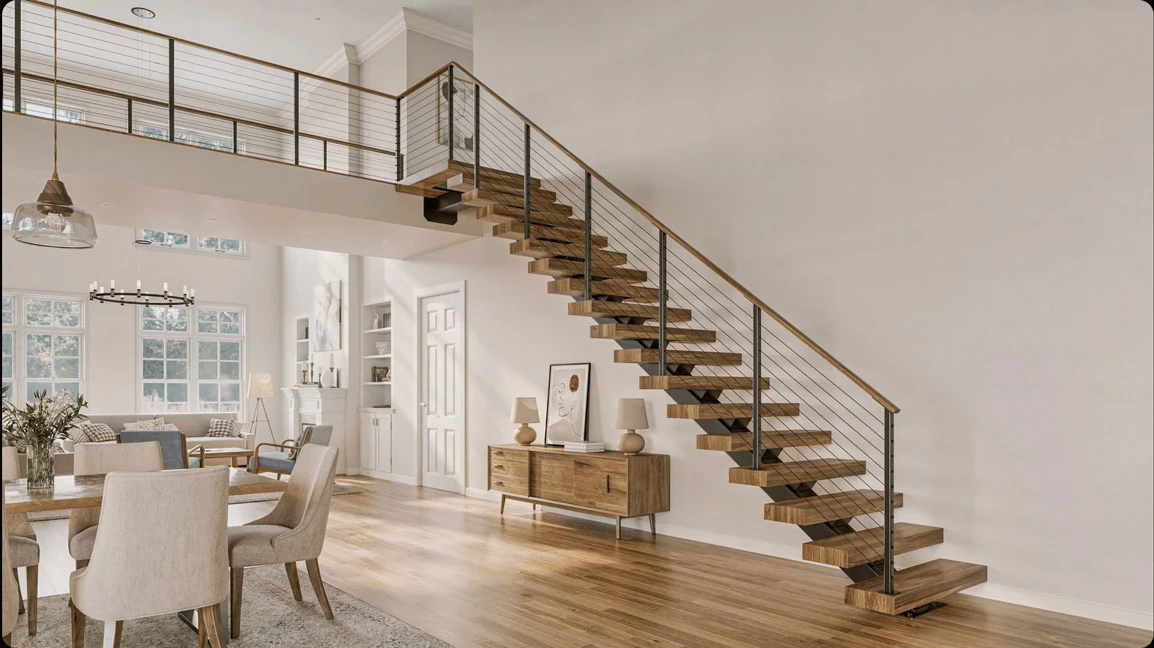
Buyers shop with their eyes first. A spiral stair creates a sculptural moment that photographs beautifully and helps your listing stand out. Mixed materials, warm wood treads with a clean steel structure, also align with 2025 comebacks The Spruce calls out. The result is a stair that looks design-forward in photos and feels intentional on the walkthrough.
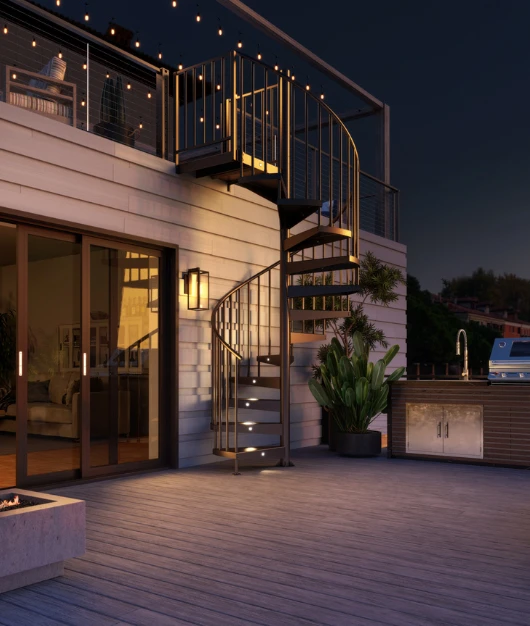
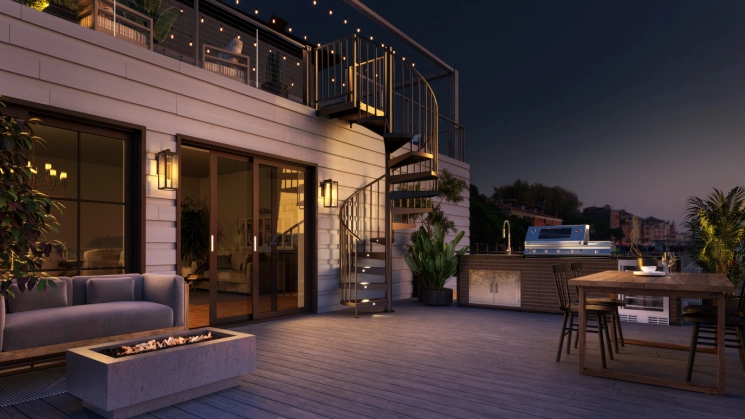
3) They enable outdoor living (a proven resale lever)
Connecting interior and exterior spaces adds both lifestyle and value. The 2024–2025 Cost vs. Value Report consistently lists deck additions and outdoor living improvements among the top performers for resale ROI.
4) They save floor area in tight plans
A spiral’s footprint is essentially its diameter squared plus 2″ for handrail use. For example, a 5′ diameter stair occupies a 62″ × 62″ square. In small homes, ADUs, and loft apartments, that compact “vertical cylinder” can fit where a straight run can’t, freeing adjacent area for storage or furniture. Explore exact sizing in our Spiral Stair Dimensions Guide.
Pro tip: Size for daily life. Most homeowners choose 5’–6′ diameters to achieve ~26″–32″ clear walking path at the handrail, comfortable for everyday use while staying compact. See our Clearance & Comfort Guide for details.
What Buyers Care About (and Appraisers Notice)
- Code-compliant access. The International Residential Code allows spirals with narrower clear widths than straight stairs when built to spec, preventing inspection issues and protecting value.
- Safety details. Continuous handrail, proper baluster spacing, and tread grip signal quality and comfort. See our Spiral Stair Safety Tips.
- Photography & first impression. The NAR Remodeling Impact Report shows first-impression projects perform best at resale, feature your stair in listing photos.
Plan with confidence
Get expert sizing for code, comfort, and budget plus a fast quote.
How to Choose the Right Spiral (to Protect Value)
- Choose the right diameter. 5’–6′ diameters (~26″–32″ clear) feel best for everyday use. See our Comfort Sizing Guide.
- Match materials to environment. Indoors: steel and wood. Outdoors: powder-coated aluminum or galvanized steel for long-term durability. Explore our spiral stairs material options.
- Design for the photo. Open balusters, warm tones, and light-friendly positioning create the most marketable look.
- Verify code early. Confirm opening, landing, and handrail specs against the IRC spiral section before ordering.
Cost & Payoff Expectations
There’s no single ROI percentage for spiral stairs, but they influence value through space, lifestyle, and aesthetic appeal. Functional and curb-appeal projects tend to recoup the most investment per the Cost vs. Value Report.
Make your loft or deck a daily-use space
Work with a stair designer to size, spec, and price your spiral fast.


