


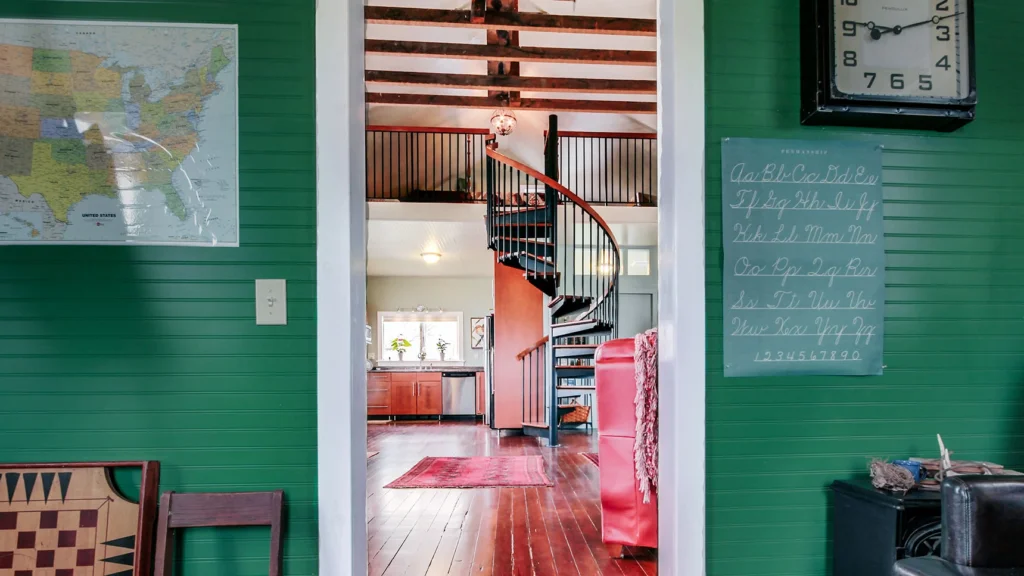
Non-traditional homes ask more of every square foot. Whether you’re stacking factory-built modules, converting shipping containers, finishing a barndominium, or planning a tiny house, vertical circulation can make or break the layout. Spiral stairs deliver code-conscious, comfortable access in a compact footprint and they ship in components for clean installation on tight sites.
Key Takeaways
- Spiral stairs maximize vertical space in modular, prefab, and container homes without sacrificing comfort or code compliance.
- Prefabricated components make installation faster and cleaner, ideal for off-site or factory-built construction.
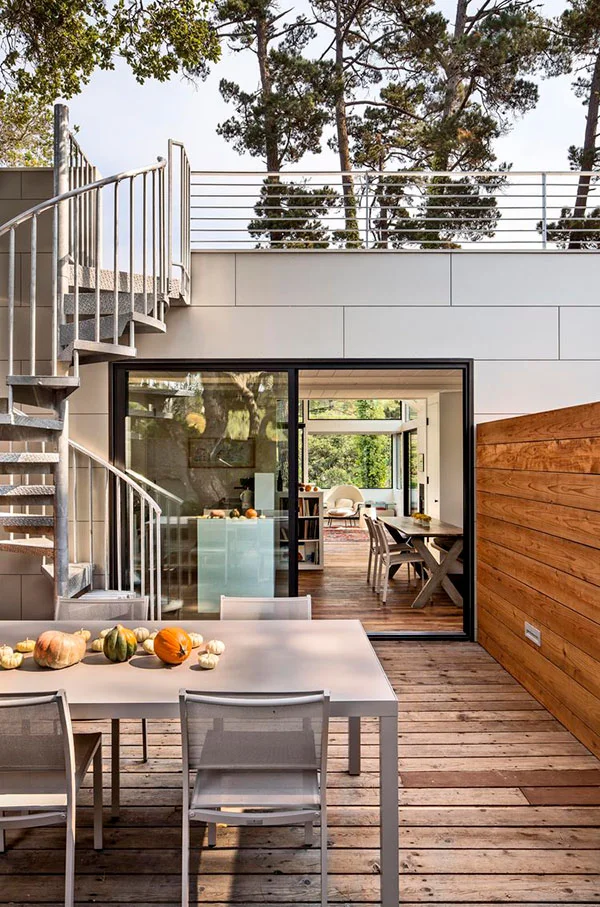
- Outdoor-rated options like powder-coated aluminum and galvanized steel extend design continuity to decks and roof terraces.
- Compact diameters fit tiny homes, while larger spirals enhance barndominiums and two-story modular layouts.
- Custom finishes and lighting transform a functional stair into a design statement in any non-traditional home.
Ready to explore spiral options for your build?
Choose size, materials, and finishes and speak to a designer in minutes.
Why Modular, Prefab & Container Homes Need Smarter Stair Solutions
- Compact footprint: A vertical circle replaces long runs and landings.
- Prefab-friendly: Ships as components; quick assembly after delivery.
- Flexible placement: Corners, window bays, or double-height volumes.
- Interior & exterior continuity: Match an indoor spiral with an outdoor-rated deck or roof access spiral for a cohesive look.
- Design impact: A sculptural focal point that elevates minimalist layouts.
1) Container Homes: Compact Access That Fits the Frame
Shipping container shells are efficient but tight. A spiral stair provides stand-up, hands-free access to mezzanines or stacked containers while preserving precious floor area. Place the stair at the container’s end wall or within a widened opening where two containers meet to borrow light and create natural wayfinding.
Pro Tip: Choose open risers and slender pickets to keep sightlines open in narrow container-width rooms.
- Material picks: Indoor steel or wood treads for interiors; powder-coated aluminum or galvanized steel for exterior stairs between containers.
- Great with: 42–54″ diameters, depending on daily vs. occasional use.
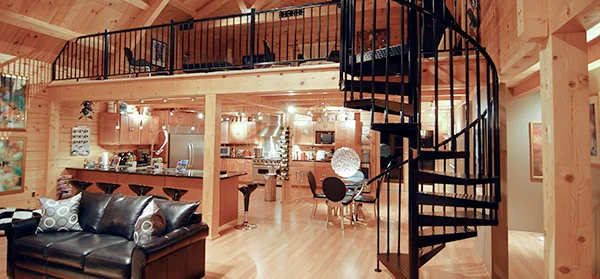
2) Barndominiums: Volume, Light & Loft Connection
Barndominiums blend open, airy volume with practical multipurpose spaces. A spiral near the entry or great room keeps living areas open while providing direct access to a lofted office, bunk room, or storage. Match the architecture with powder-coated steel for modern builds, forged iron for rustic warmth, or wood treads to soften metal skins.
Design Tip: Add under-tread LED lighting to turn tall, open spaces into evening showpieces.
- Great with: 54–60″ diameters in double-height volumes; 48″ where plans are tighter.
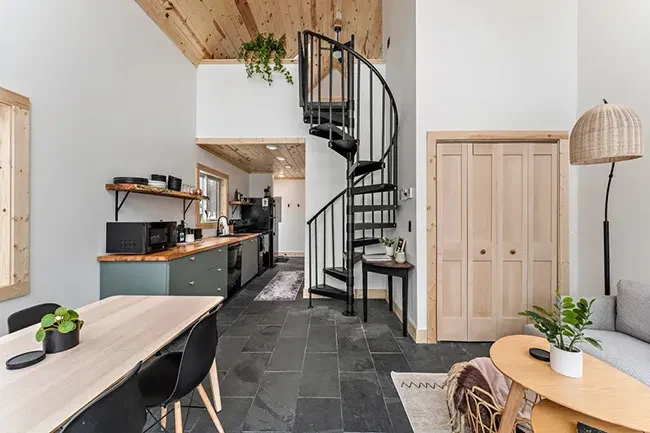
3) Prefab Cabins & ADUs: Easy Shipping, Faster Install
Accessory dwelling units and prefab cabins thrive on quick set-up. Spiral stairs arrive in labeled components, navigate tight sites, and assemble cleanly after the unit is placed, no oversized stringers or complex site-built framing. They’re ideal for lofted sleeping platforms and compact second-floor studios.
Pro Tip: Use a landing platform to bridge the spiral to straight walls or guardrails in prefab modules.
- Exterior options: Powder-coated aluminum for coastal or high-moisture climates; galvanized steel for rugged, low-maintenance sites.
- Great with: 48–54″ diameters for frequent daily use.
Planning a container or modular layout?
See how a spiral stair can maximize floor space and add easy loft or roof access.
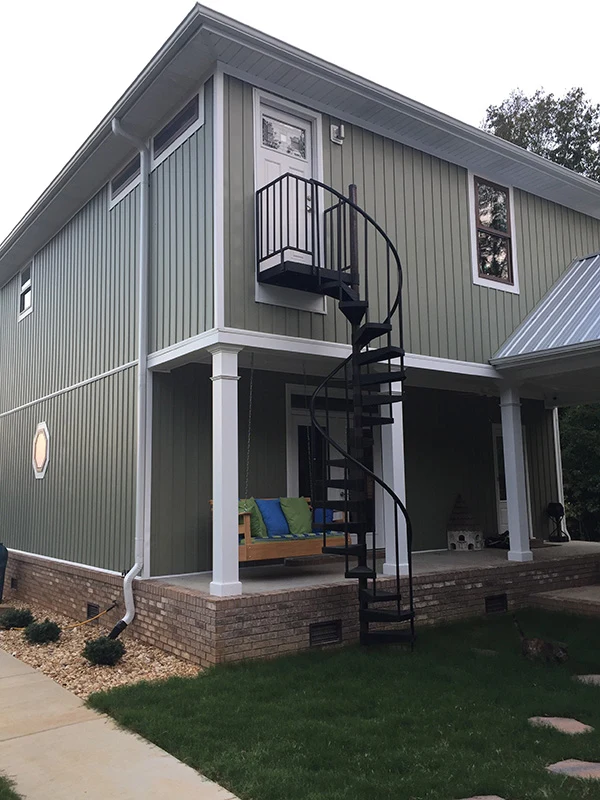
4) Modular Homes: Seamless Fit Between Stacked Units
In stacked modular layouts, spirals create a seamless connection between floors without sacrificing plan depth for long runs and landings. Align the top landing with corridors or a window bay to pull light through the core and make transitions intuitive.
Code Note: Most local building departments approve spiral stairs for primary use when they meet required diameter and tread dimensions. Always confirm local code specifics before finalizing your design.
- Design tip: Rotate the last quarter-turn of treads to aim the landing toward a doorway or circulation line.
- Great with: 54–60″ diameters in family-use areas
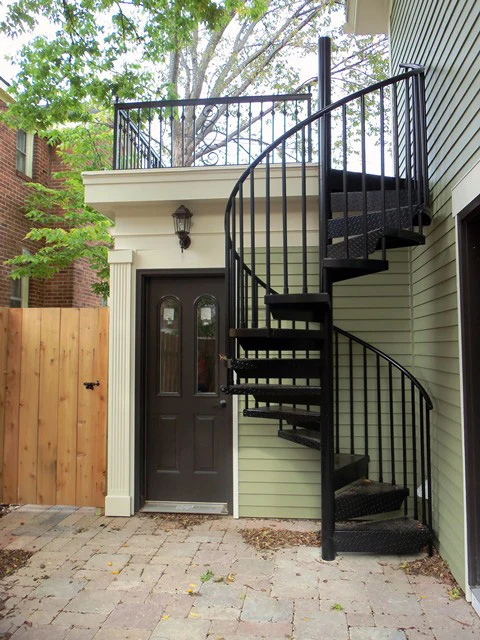
5) Tiny Houses: Full Function in a Small Footprint
For tiny houses, every inch works double-time. A spiral stair offers safer, everyday access than a ladder while preserving open floor area for seating, storage, or a workspace. In compact plans, the stair becomes a sculptural anchor that organizes the interior.
Pro Tip: Choose slim, open railing styles to keep the stair feeling airy, and use warm wood treads to add softness in compact spaces.
- Great with: 42–48″ diameters for occasional or solo use; 48–54″ for daily, two-person circulation.
Design Tips: Integrating Spirals into Non-Traditional Builds
- Diameter strategy: Choose the largest diameter that comfortably fits your plan for daily use.
- Opening & headroom: Ensure clear headroom at entry/exit; size loft openings to fit top landings and rail returns.
- Material match: Indoor steel/wood finishes for living spaces; powder-coated aluminum or galvanized steel outdoors.
- Traction & drainage: Grated or textured treads help in rain and snow.
- Lighting: Under-tread improves safety and adds a sculptural glow.
- Ladder vs. spiral: Ladders suit occasional use; spirals offer daily comfort in less space than a straight run.
Working on a barndominium, ADU, or container home?
Send your floor plan! Our team will recommend diameter, landing direction, and materials tailored to your build.


