
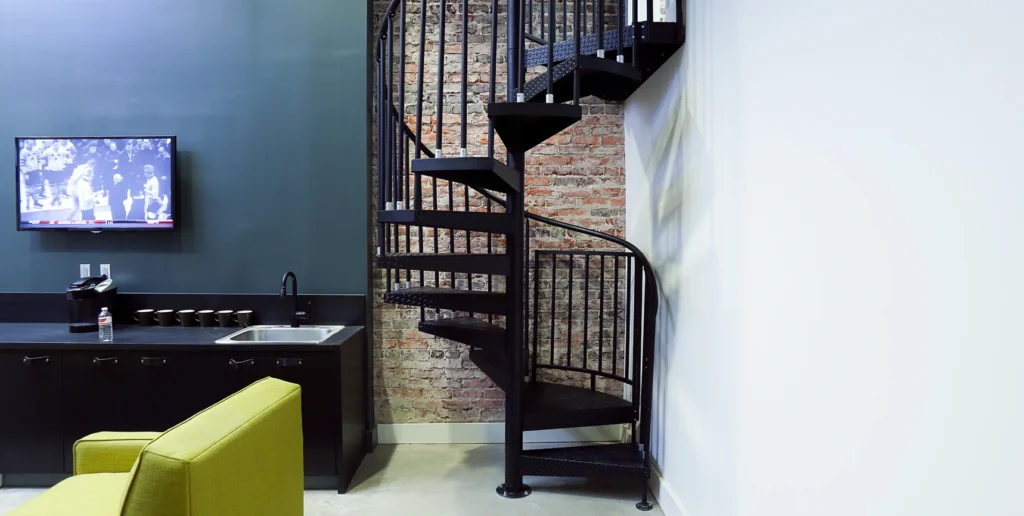
Building a loft, attic room, or tiny home? You don’t have to stick a ladder in the corner and call it done. Today’s compact stair options, especially spirals, turn small footprints into standout design moments. Here’s how to make your space safer, more comfortable, and more beautiful, all without eating up precious square footage.
Key Takeaways
- Spiral stairs save the most floor space while offering real comfort and stability.
- Alternating-tread and modular kits can work for ultra-tight or occasional-use lofts.
- Choosing the right diameter, material, and railing style shapes both function and feel.
- Plan early: headroom, layout, and landing direction determine your perfect fit.
Ready to design your own?
Use our interactive tool to pick size, materials, and finishes and speak to a designer in minutes.
Why ladders fall short once you’re living with them
Ladders feel simple at first, but daily use quickly exposes their limits:
- Safety: Steep rungs and no railing make every trip risky, especially for kids, pets, or sleepy mornings.
- Comfort: Carrying baskets, groceries, or coffee becomes awkward without a full tread or handhold.
- Long-term appeal: A permanent stair feels intentional and boosts your home’s value and usability.
Space-saving stair formats that actually work
1) Spiral Stairs: Compact, comfortable, and sculptural
Spirals wrap the climb around a central column, condensing an entire flight into a circular footprint. The result: a full stair experience that fits where a straight run never could.
- Smallest footprint: Typical diameters start at 3’6″, perfect for lofts, studios, and secondary access points.
- Built-in safety: Continuous handrail and consistent treads give confident footing on every step.
- Custom look: Choose steel with wood treads for an organic modern feel, or all-wood for warmth and cottage charm. For exterior use, opt for powder-coated aluminum or galvanized steel.
Design Tip:
Align your top landing so the last few treads flow naturally into the loft. This makes the transition feel seamless and intentional.
Need visual inspiration?
Download our Spiral Stair Inspiration Guide for small-space installs, finishes, and railing ideas.
2) Alternating-Tread Stairs: For ultra-tight footprints
Alternating-tread stairs use offset steps that match your stride pattern to shorten the overall run length. They’re a creative compromise between a full stair and a ladder.
- Best for: Occasional-use lofts, attics, or micro-units with extremely limited space.
- Why they work: They cut run length almost in half while maintaining more stable footing than a ladder.
- Keep in mind: Add lighting and a handrail to make each step intuitive and safe.
Design Tip:
For alternating-tread stairs, install overhead or wall sconces to define each step and improve visibility.
3) Modular Stair Kits: Quick installs for DIY-friendly builds
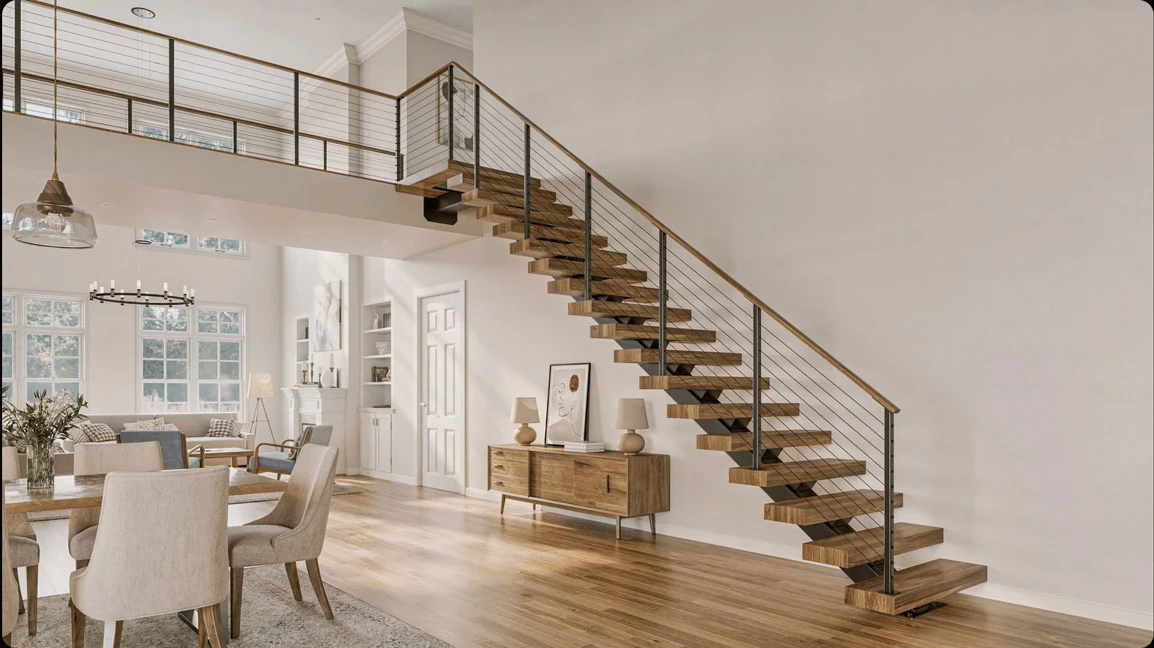
Modular stairs arrive as adjustable kits that can adapt to your ceiling height and available floor area. They’re a budget-friendly entry point for permanent loft access and can blend modern or traditional looks depending on finish choices.
- Setup: Pre-engineered components simplify install and reduce custom fabrication time.
- Styles: Mix metal structures with wood treads or all-metal minimal designs.
- Upgrade path: Many homeowners start with a modular kit and later upgrade to a custom spiral once the space layout is finalized.
Design Tip:
Keep your modular stair’s finish cohesive with trim or flooring for a polished built-in look.
Choosing the right stair for your small space
- Daily traffic? Pick a spiral. It feels natural underfoot and fits most footprints.
- Occasional use only? Alternating-tread or modular kits can save cost and space.
- Outdoor access? Powder-coated or galvanized spirals stand up to weather and free up deck space.
- Design priority? A spiral instantly becomes the architectural centerpiece of any small space.
Quick Planning Sketch
- Mark your available floor area: a circle for spirals, a rectangle for modular stairs.
- Check headroom at the upper landing.
- Plan your rotation and landing direction early.
- Confirm door and furniture clearances nearby.
Materials & railing styles to define your look
- Steel + Wood: Warm meets modern, perfect for organic interiors.
- All-Wood: Cozy and classic for cabins, cottages, and tiny homes.
- Powder-Coated Aluminum: Lightweight, rust-resistant, and ideal outdoors.
- Galvanized Steel: Industrial durability for exposed applications.
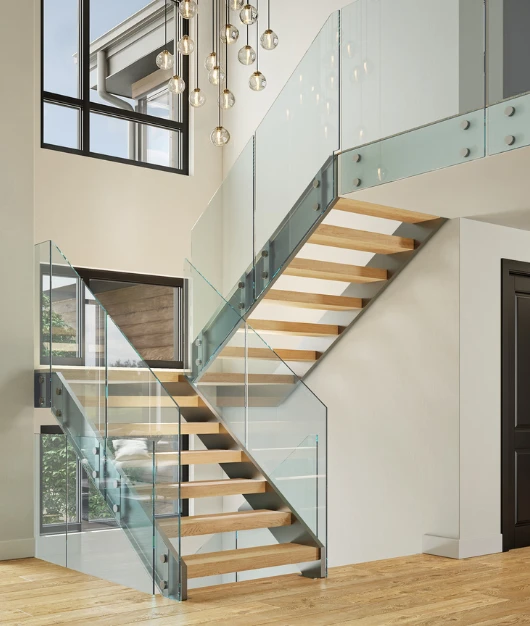
Railing is your style signature. Cable and glass create openness, while spindles or forged iron add traditional detail.
Real-life small-space ideas
Lofts & Attics
Replace a vertical ladder with a 4- or 5-foot-diameter spiral and you’ll gain both safety and design polish. Choose a matching wood species for treads and loft flooring for a built-in look.
Tiny Houses
Spirals turn circulation into sculpture. Use the space beneath for hidden storage or décor, and match the railing finish to your hardware for cohesion.
Outdoor Decks
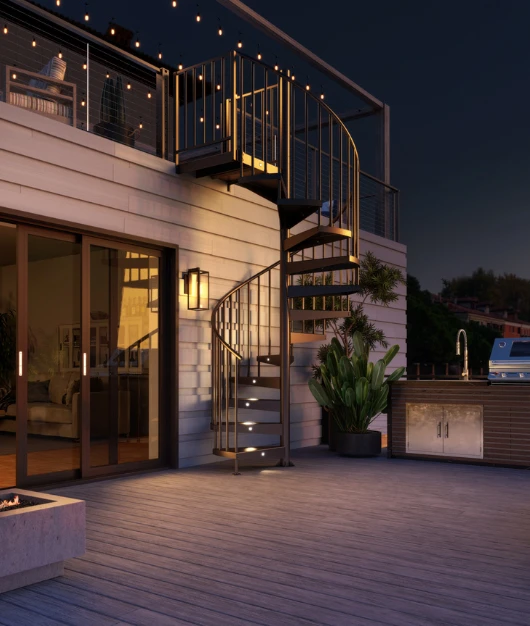
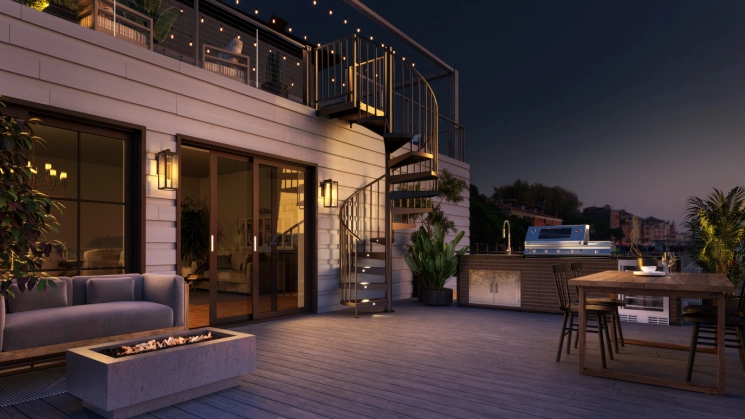
An exterior spiral is the most space-efficient way to reach an upper deck or balcony. Powder-coated aluminum keeps maintenance low while withstanding rain and UV exposure.
See how it fits before you buy.
Experiment with diameters, finishes, and railing options in our visual configurator, then get your personalized quote in minutes.
Installation & delivery tips
- Confirm doorways and hall clearances for shipping crates.
- Identify your floor anchor and ceiling opening before ordering.
- Schedule finish work (paint, stain, or powder coat) after final fitting.
Start your small-space upgrade today.
From tiny homes to attics and decks, our spiral designs make the most of every inch.


