


Building a container home or A-frame means balancing form and function in a tight footprint. Every square foot counts, and every design choice needs to work double duty, especially your stairs. Whether you are connecting a loft, joining stacked modules, or working around a steep roofline, the right stair design makes your space safer, more comfortable, and visually cohesive.
Key Takeaways
- Spiral stairs offer the strongest balance of space savings, comfort, and design flexibility.
- A-frames and container homes benefit from compact stairs with minimal landing footprints.
- Headroom, clearance, and placement drive which stair format works best for your layout.
- Plan early: floor to floor height and rotation matter more than total square footage.
Why compact stairs beat ladders in real life
Ladders look simple in renderings, but living with one can be inconvenient and unsafe. Compact stairs, especially spirals, create a stable connection between levels without taking over your floor plan. They are easier to climb, safer for carrying everyday items, and can double as an architectural focal point.
Ready to see options sized to your space?
Use our interactive tool to select diameter, materials, and finishes, then get pricing in minutes.
Container homes: planning stairs inside a modular box
In container homes, structure defines design. Walls, beams, and openings are set dimensions, so stair selection is less about available square footage and more about layout and flow. Compact stairs integrate into a corner, along a wall, or between modules to maintain open living space.
Spiral stairs: the go to for modular builds
Spirals concentrate vertical travel in a small footprint. They are ideal for connecting lofts, mezzanines, or stacked units while keeping the rest of your layout open.
- Ideal for: Loft access, upper sleeping spaces, rooftop decks.
- Best materials: Powder coated steel or aluminum for structure, wood treads for warmth.
- Key benefit: Comfort and stability without the hallway footprint of a straight run.
Alternating tread stairs for ultra tight spaces
When every inch counts, alternating tread stairs fit narrow lanes. The staggered steps make steep climbs manageable while saving several feet of run length. Best for occasional use lofts or storage access.
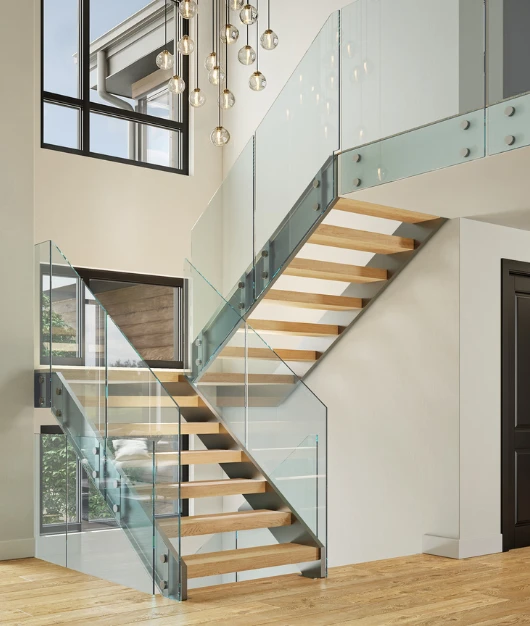
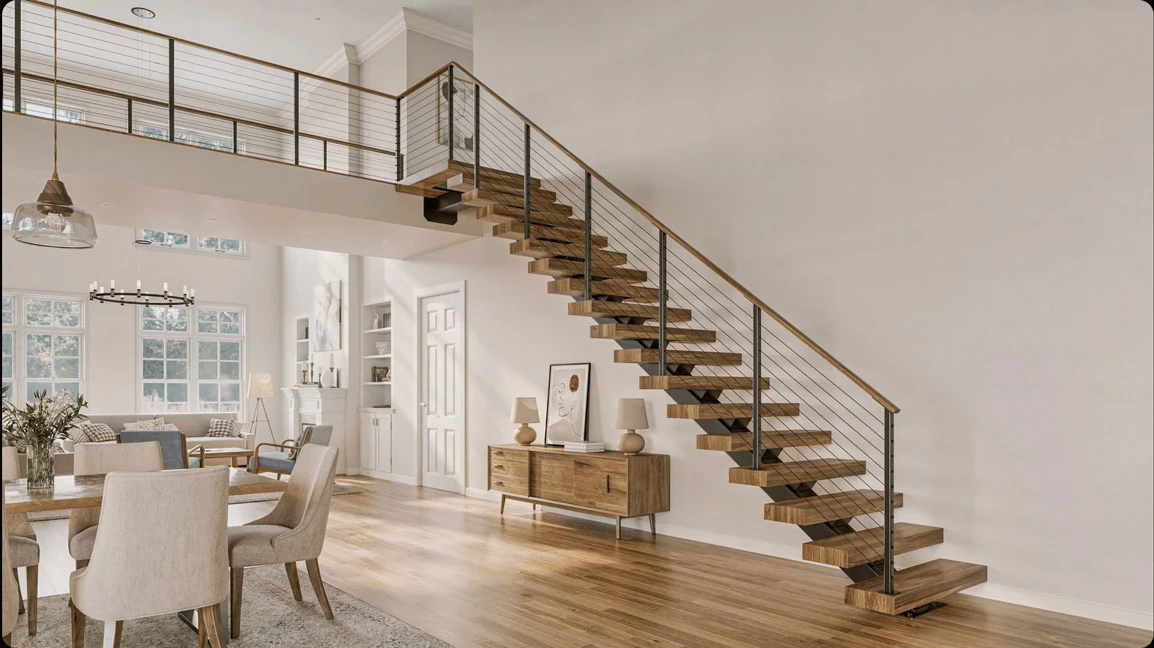
Modular straight runs for open walls
If you can dedicate one container wall, a slim straight or modular run adds everyday comfort and clean lines. Many designers build storage or shelving beneath for extra utility.
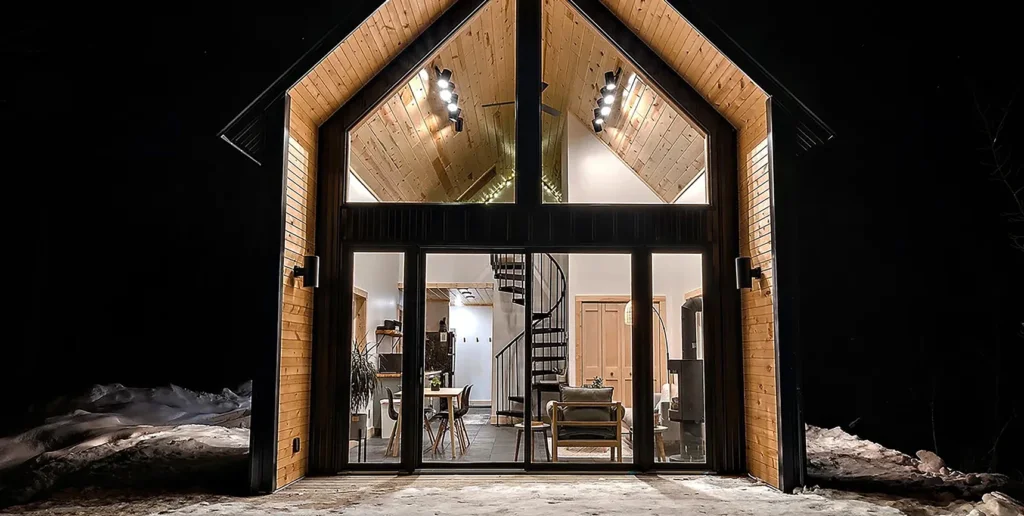
A-frames: stairs shaped by the roofline
A-frames deliver rustic charm and volume, but the angled roof squeezes headroom quickly. Your stair must land where ceiling height remains comfortable. Compact formats, especially spirals, align beneath the ridge beam and preserve open sightlines.
Smart placement ideas
- Position the stair opening near the ridge for maximum loft headroom.
- Keep the walking line away from low eaves and windows.
- Choose open railings or horizontal infill for an airy, modern feel.
Design checklist: choosing the right compact stair
1) Measure carefully
Floor to floor height, ceiling obstructions, and landing direction all impact what fits. Even a few inches can change the available diameter or rotation direction.
2) Pick your format
- Spiral: Compact and comfortable for daily use.
- Straight: Best for long walls with clear approach paths.
- Alternating tread: Tightest option for limited access zones.
3) Match materials to environment
- Indoor: Steel or aluminum frames with wood or composite treads.
- Outdoor: Powder coated aluminum or galvanized steel for weather resistant durability.
4) Plan lighting and railing early
These details define safety and style. Under tread LEDs and slim pickets help small spaces feel bright and tall.
Free Download: Spiral Stair Planning Checklist
Plan your project from measurements to site prep with our printable checklist. Perfect for container homes, A-frames, and any small space stair design.
Layout inspiration: small space success stories
Corner loft in a container home
- Spiral tucked in a back corner leading to a cozy loft with guardrail overlook.
- Open space beneath the loft reserved for a kitchen or workspace.
Two module junction
- Spiral centered in the seam between modules to create a natural focal point.
- Landing rotated to step into the loft where headroom peaks.
A-frame ridge landing
- Round cutout under the ridge beam with spiral positioned for balanced headroom and symmetry.
Finish styles that elevate small homes
- Organic modern: Matte black frame, oak treads, minimalist handrail.
- Industrial: Galvanized exterior spiral with open steel treads.
- Minimalist coastal: White frame, light wood treads, open balusters.
Installation tips for small footprint builds
- Confirm structural support below the stair and at the landing.
- Check door swings, windows, and ceiling obstructions before finalizing placement.
- Stage large furniture before installing final railings in compact lofts.
- Use the checklist to verify measurements, clearances, and anchorage points before ordering.
See what fits your measurements
Share your floor to floor height and layout details, and we will match you with a stair design and quote in minutes.
FAQs
Can I replace a loft ladder with a spiral stair later?
Yes. Most container and A-frame lofts can retrofit a spiral using the existing opening or a framed cutout once the layout is finalized.
Will a spiral block my windows or natural light?
No. Open balusters and a slim center column keep your space bright and visually open.
Can I use the same stair design outdoors?
Absolutely. Galvanized steel or powder coated aluminum spirals are ideal for decks, balconies, and rooftop access in container or cabin builds.
Next Steps
- Configure a spiral stair designed for your container or A-frame home.
- Download the Spiral Stair Planning Checklist to plan with confidence.
- Explore real customer projects for inspiration and finishes.


