
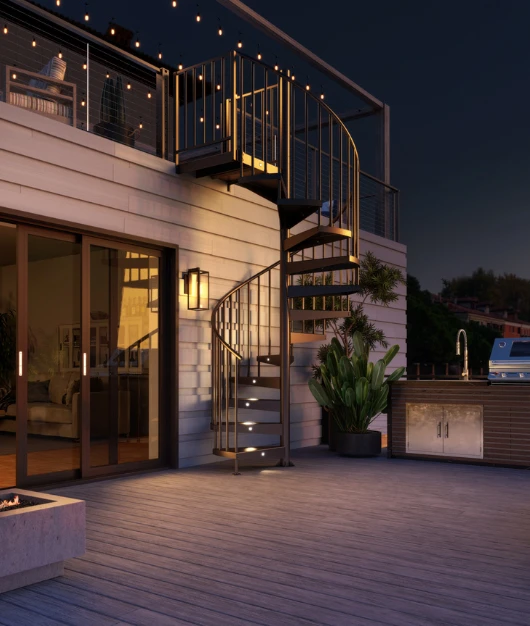
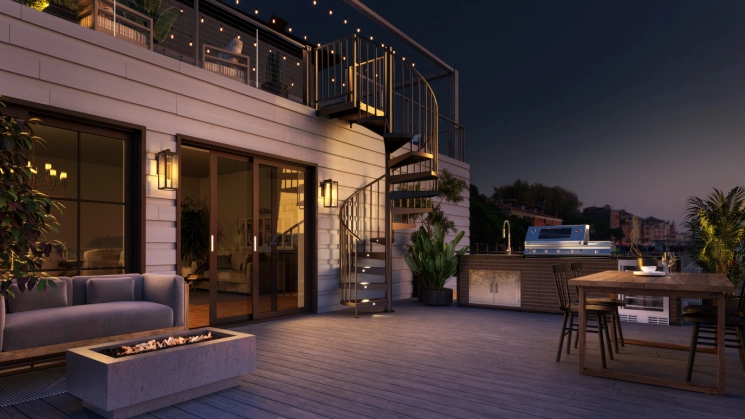
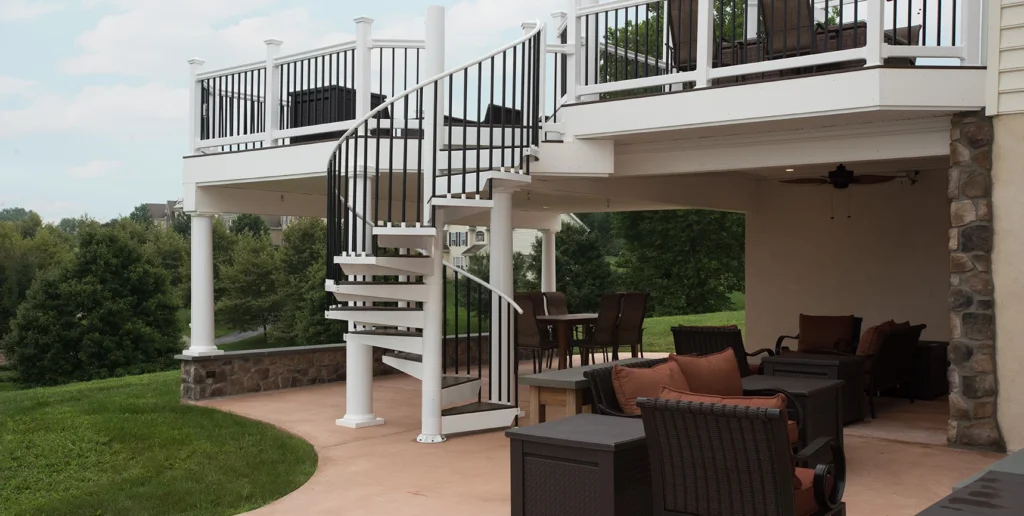
When your deck is where everyone gathers, every square foot matters. Outdoor spiral stairs free up valuable floor space and open up better traffic flow so guests can move easily between the yard, patio, and upper deck. Whether you are building a new multi level deck or upgrading an existing space, a spiral can turn awkward corners into useful seating, grill, or bar zones without the bulky footprint of a straight-run staircase.
Key takeaways
- Spiral stairs reclaim deck space, often 40–60% less footprint than straight stairs of the same rise.
- Powder-coated aluminum resists rust and comes in curated colors; galvanized steel delivers heavy-duty durability for high-exposure installs.
- Smart placement such as corner mounting, under-deck tuck, or yard walk-off improves traffic flow and sightlines.
- Landing platforms including 90°, 180°, and straight help align your walk-off with doors, gates, and patio zones.
- Pre-engineered systems streamline permitting and install while meeting common residential code parameters.
Design Your Outdoor Spiral
See your stair come to life as you choose diameter, height, finish, and treads, perfect for planning your deck staircase.
Why a spiral stair makes decks feel bigger
On a hosting-first deck, the space a staircase occupies is lost seating. A spiral concentrates the rise into a compact circle, protecting the prime real estate along the railing where you want a sectional, cafe table, or grill. That reclaimed area can be the difference between a two-seat corner and a conversation set for four.
Footprint basics
Spiral stairs are sized by diameter, for example 5 ft, 5½ ft, or 6 ft. A 5 ft spiral typically sits inside a 62 in x 62 in square, while a comparable straight-run stair needs a long, clear corridor, often 10–12 ft or more when you include headroom and landing space. If you are squeezing seating, planters, and a fire table, that is a major win for the spiral.
Best materials for outdoor spiral stairs
Exterior stairs work hard against sun, rain, and temperature swings. Two proven choices cover most outdoor scenarios.
Powder-coated aluminum
- Why choose it: Lightweight, corrosion-resistant, and low maintenance. Powder-coat finishes provide color options that coordinate with deck boards and railing.
- Great for: Coastal or humid regions, modern decks, and when color integration is a priority.
Galvanized steel
- Why choose it: Hot-dip galvanization creates a rugged zinc layer for heavy-duty longevity.
- Great for: High-traffic stairs, hard-use yards, cabins, and utility-forward spaces where maximum durability matters.
Shop Outdoor Models
Compare powder-coated aluminum and galvanized steel side-by-side to pick the ideal fit for your climate and deck design.
Smart placement ideas for multi level decks
Good stairs disappear into the flow. These placement strategies maximize usable deck space and create smooth movement during parties.
- Corner mount, interior arc: Tuck the central column into a back corner so the stair curve hugs the railing line. You will free up the longest wall for seating.
- Under-deck tuck: On upper decks with a covered zone below, land your spiral under the joists to keep pathways dry and shaded.
- Yard walk-off alignment: Aim the final tread toward a patio, fire pit, or gate for intuitive guest movement.
- Door adjacency: Where possible, position within a few steps of the main slider or kitchen door to simplify hosting runs.
Landings that line up your layout
Platforms help your spiral meet the deck edge cleanly and point traffic where you want it. Three common options include:
- 90° Landing: Turn the stair to line up with a rail opening or side gate.
- 180° (U-turn) Landing: Ideal for tight returns or when you want the walk-off facing the house.
- Straight Walk-Off: A clean, no-turn exit for broad rail openings and wide deck fronts.
Railing, treads, and details that elevate the look
Style choices make your stair feel custom without losing the compact footprint.
- Treads: Grip-friendly perforated or diamond plate for all-weather use; composite-cap options to echo your deck board color.
- Balusters: Vertical balusters for a clean, modern line; tighter spacing for kid-friendly decks.
- Handrail: A continuous, comfortable grasp profile makes the spiral feel inviting and safe for all ages.
- Color: Dark neutrals such as charcoal or black visually recede, lighter tones can tie into trim or deck beams.
Code and comfort: what to expect
Residential spirals are designed around common guard and handrail parameters with comfortable rise and run proportions. The compact footprint does not mean cramped steps. Diameter, rise per step, and center pole placement are tuned for everyday use. Pre-engineered systems with documentation simplify permit review and inspection. Your specific municipality may vary, but a purpose-built kit typically accelerates approvals compared to one-off fabrication.
Installation: DIY vs. pro
Pre-engineered spirals are delivered as a complete kit with center column, treads, platform(s), rail, balusters, and hardware. Many experienced DIYers install a spiral in a weekend with a helper; pros can complete most projects in a day. The most important step is measuring floor-to-floor correctly including finished surfaces and choosing the right landing orientation for your deck layout.
Maintenance and longevity
Outdoor spirals are built for the elements. Powder-coated aluminum cleans with mild soap and water; galvanized steel weathers hard use with minimal care. Periodic fastener checks and seasonal rinses are usually all you need to keep the stair looking fresh for hosting season year after year.
Deck design ideas that shine with a spiral
- Grill zone upgrade: Use the reclaimed footprint to add prep space and a drop-in cooler.
- Conversation corner: Turn the freed-up area into a two-chair and table coffee nook with planters.
- Bar rail seating: Align stools along the railing where a straight stair once sat.
- Fire table layout: Curate a circular seating pattern that mirrors the spiral geometry.
- Garden-to-deck flow: Aim the walk-off toward a path that loops through lighting and landscaping.
Browse Featured Projects
See how other homeowners used spirals to open up seating, add a bar zone, and connect multi level deck spaces.
FAQ
How big should my outdoor spiral be?
Most single-family decks are comfortable with 5 ft to 6 ft diameters. If you anticipate frequent two-way traffic during parties, size up to maximize passing comfort and hand clearance.
Can I match my deck color?
Yes, powder-coated aluminum offers curated neutrals that coordinate with popular deck boards and railing finishes. Galvanized steel can be left as is or finished as desired.
Will a spiral feel safe for kids and guests?
Pre-engineered outdoor spirals are designed with continuous handrails and consistent step geometry. Choose baluster spacing and tread texture that fit your household.
What about snow, rain, and coastal air?
Choose aluminum for high humidity or coastal exposure and galvanized steel for heavy-duty wear. Add textured treads for traction, and plan a landing orientation that sheds water away from traffic lanes.
Next steps
Measure your finished floor-to-floor height, note nearby doors and furniture zones, and sketch where you want guests to land. With a few details such as diameter, material, and landing orientation, you can transform your deck flow without sacrificing seating.
Get Your Deck Stair Pricing
Answer a few questions and our designers will reach out with a no-pressure quote.


